
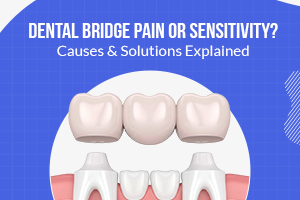
Your smile, bite, and confidence can all be restored with dental bridges, which are a dependable and efficient method of replacing one or more missing teeth. However, some people may have discomfort or tooth sensitivity following the operation. You’re not alone if you’re wondering, “Why does my tooth hurt after a dental bridge?” It’s a question worth providing correct, reliable answers to.
This article will discuss the major causes of sensitivity and discomfort following dental bridge placement, when this is typical, and how to get the greatest relief while safeguarding your oral health.
What Are Dental Bridges and Why Are They Used?
It secures an artificial tooth (pontic) to nearby natural teeth or implants. A dental bridge is a permanent restorative that can be used to replace one or more lost teeth. It is beneficial:
- Restore the ability to speak and chew.
- Preserve your facial structure.
- Stop the adjacent teeth from moving.
- Enhance the appearance of your smile.
The bridge is supported and kept firm by crowns on the teeth adjacent to the gap, known as abutment teeth.
Is Pain Normal After a Dental Bridge?
Yes, in the initial days following bridge placement, some degree of discomfort and soreness is typical. The supporting teeth may feel sensitive while they settle, and your mouth requires time to become used to the new repair.
Persistent pain or sensitivity, however, that lasts more than a few weeks or gets worse over time, is abnormal and needs to be examined by your dentist.
Common Causes of Tooth Sensitivity & Pain After Getting a Dental Bridge
1. Initial Adjustment and Sensitivity
It’s common to feel heightened sensitivity to hot, cold, or pressure shortly after the bridge is placed. Your gums and teeth are adapting to the new restoration — especially if the abutment teeth were prepared or reshaped before placement.
Typical signs:
- Sensitivity to heat or cold
- Little pain during chewing
- Tenderness around the bridge site
As the mouth adjusts, this usually goes away in a few days to a few weeks.
2. Ill-Fitting Bridge or Bite Problems
An improperly fitted bridge is one of the most frequent causes of persistent sensitivity or pain. If the restoration is uneven, too high, or too tight, it may result in:
- Inconsistent bite force
- Chewing pain
- The supporting teeth’s sensitivity
In addition to causing gum discomfort and inflammation, a poor fit can trap food particles and bacteria beneath the bridge.
Signs of this issue:
- Biting causes pain.
- Feeling “off” when chewing
- Discomfort inadjacent teeth
3. Tooth Decay or Infection Under the Bridge
Your natural teeth are still susceptible to deterioration even if you have a dental bridge. Cavities or infections in the supporting tooth may result from bacteria building up beneath the bridge’s margins. When decay spreads to the pulp, the inner nerve tissue, it can result in pulpitis, an inflammation of the pulp that causes pain and sensitivity.
Watch for:
- Continuous throbbing discomfort
- Discomfort that lasts longer than a few weeks
- Pain that doesn’t let you sleep properly
Decay under a bridge cannot be fixed at home; it needs to be treated by a professional.
4. Gum Disease or Gum Irritation
If cleaning is inconsistent or difficult, food particles and plaque may become stuck around the borders of a dental bridge. Gum inflammation (gingivitis) or more severe gum disease may result from this, resulting in discomfort and stiffness around the gums.
Symptoms of gum-related issues:
- Swollen or red gums
- Bleeding during flossing or brushing
- Persistent unpleasant taste or odor
5. Bite Misalignment and Occlusal Stress
Certain teeth may experience increased pressure when a dental bridge modifies the way your teeth come into contact. Even on nearby teeth that are not immediately part of the bridge, this unequal distribution of stresses may cause pain by straining your jaw muscles and periodontal tissues.
If you’ve already experienced clenching or grinding (bruxism), this may be very apparent.
Solutions and Ways to Find Relief
1. Give It Time, But Pay Attention
Following placement, mild sensitivity is common, and many patients have mild discomfort for a few days. A steady reduction in discomfort or sensitivity is encouraging.
However, a dentist should always be seen if pain is ongoing or getting worse. Small problems can be kept from growing into larger ones with early action.
2. Maintain Excellent Oral Hygiene
To get rid of food particles and plaque, brush twice a day and floss once a day, especially around your dental bridge. To make cleaning beneath the bridge easier, think about using a water flosser or floss threader.
Healthy gums and clean teeth lessen inflammation and the chance of deterioration underneath the bridge.
3. Use Sensitive-Tooth Products
Use mouthwash and toothpaste designed for sensitive teeth to control sensitivity. These products strengthen enamel and reduce nerve reactions.
During the early stages of recuperation, stay away from overly hot or cold meals and beverages.
4. Try Saltwater Rinses
Warm saltwater rinses can help reduce inflammation and soothe inflamed gum tissue. Spit out after gently swishing ½–1 teaspoon of salt in warm water for 30 seconds. 2–3 times a day, repeat.
5. Soft Foods and Diet Adjustments
Consuming soft meals can help reduce pressure on your bridge, particularly in the early stages of rehabilitation. Steer clear of meals that are extremely crunchy, sticky, or hard since these could cause pain or stress the healing.
Eggs, yoghurt, cooked veggies, and cold soups are all good soft choices.
6. Professional Adjustment if Needed
After a few weeks, your dentist can modify the bridge’s fit if you still have pain when biting or chewing, or if the sensitivity persists. Areas of high pressure can be removed, and discomfort can be decreased with even little adjustments.
When to Call Your Dentist
Speak with your dental team if you encounter:
- Pain that is severe or continuous and lasts longer than a few weeks
- Pain that makes it difficult to eat or go about daily tasks
- Infection symptoms include fever, redness, or swelling
- A shaky or shifting bridge
These signs could point to a more serious problem that requires medical attention.
Final Thoughts
One tried-and-true method of replacing lost teeth is using dental bridges. Most symptoms should go away with time; you may experience some sensitivity and minor discomfort while your mouth adjusts. You should get a professional evaluation if you continue to experience discomfort, sensitivity, or changes in your bite.
Our skilled staff at Pleasant Dental in Euless, Texas, will evaluate your symptoms. We make sure your dental bridge fits correctly, and offer treatments that will improve your comfort and oral health for years to come.