
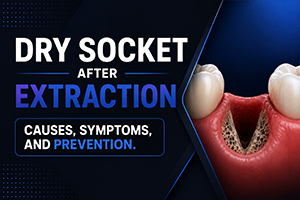
Having a tooth removed is a common dental procedure, and most extractions heal without any major problems. However, some patients may develop a condition called dry socket, which can cause significant pain and delay the healing process.
Although dry socket is relatively uncommon, knowing the warning signs and understanding how to reduce your risk can make recovery much smoother. At Pleasant Dental Euless, we provide detailed aftercare instructions to help patients heal comfortably and minimise the chance of complications.
What is a dry socket?
A dry socket, also known as alveolar osteitis, occurs when the protective blood clot that forms after a tooth extraction becomes dislodged, dissolves too early, or fails to develop properly.
Normally, this blood clot protects the underlying bone and nerves while the extraction site heals. When the clot is lost, the bone and nerve endings become exposed, leading to intense pain and slower healing.
Dry socket most commonly occurs after wisdom tooth removal but can develop after any tooth extraction.
What causes a dry socket?
Several factors can increase the likelihood of developing a dry socket. While it cannot always be prevented, understanding the common causes can help reduce your risk.
Some of the most common causes include:
- Smoking or using tobacco products after an extraction.
- Drinking through a straw during the healing period.
- Vigorous rinsing or spitting too soon after surgery.
- Poor oral hygiene around the extraction site.
- Previous history of dry socket.
- Difficult or surgical tooth extractions.
- Certain medical conditions or medications that affect healing.
Following your dentist’s post-operative instructions carefully is one of the best ways to lower your risk.
Identifying Early Stage Dry Socket
Catching the issue early can save you from days of unnecessary discomfort. An early-stage dry socket is characterized by a change in the type of pain you feel. Normal post-surgical pain should be manageable with medication and should get better every day.
If you look into your mouth with a flashlight, you might see the signs. A healthy socket has a dark red blood clot inside. In an early-stage dry socket, the opening may look empty or dry. You might see whitish bone instead of a dark clot. Another early sign is a persistent dull ache that begins to radiate toward your ear or temple.
Symptoms of a dry socket
Some discomfort is completely normal after a tooth extraction. Mild swelling, tenderness, and soreness usually improve gradually over the first few days.
Dry socket pain is different. Instead of improving, it often becomes more severe within two to four days after the extraction.
Common symptoms include:
- Severe, throbbing pain at the extraction site.
- Pain that radiates to the ear, jaw, temple, or neck.
- A visible empty socket where the blood clot is missing.
- Exposed bone inside the extraction site.
- Persistent bad breath or an unpleasant taste in the mouth.
- Pain that is not relieved by over-the-counter medication.
If you experience these symptoms, contact your dentist as soon as possible for evaluation.
Primary Dry Socket Cause Factors
Why does this happen to some people and not others? There is rarely just one dry socket cause. It is usually a combination of biological factors and post-operative behavior.
1. Mechanical Dislodgement
The most frequent cause is the physical removal of the clot. This happens when a patient uses a straw or smokes. The suction created in the mouth pulls the clot right out of the hole. Vigorous spitting or rinsing can also wash the clot away before it is secure.
2. Infection and Bacteria
Existing infections in the mouth can prevent a healthy clot from forming. High levels of bacteria near the extraction site can break down the clot prematurely. This is why your dentist may recommend an antibacterial mouthwash before and after the surgery.
3. Blood Supply Issues
Certain factors can restrict blood flow to the jawbone. If the blood cannot reach the site, a clot cannot form. This is common in patients who use tobacco products. Nicotine constricts blood vessels and slows down the healing process significantly.
4. Difficult Extractions
A complex surgery, such as the removal of impacted wisdom teeth, causes more trauma to the surrounding tissue. The more trauma the area experiences, the higher the likelihood of a healing complication.
Common Dry Socket Symptoms After Tooth Extraction
It is important to differentiate between regular healing and a true complication. While pain is the main symptom, there are several other red flags to watch for.
- Severe Pain: This is not a mild ache. It is often described as a throbbing or “electric” sensation that pain medication cannot fully dull.
- Radiating Discomfort: The pain often travels from the extraction site to the ear, eye, or neck on the same side of the face.
- Visible Bone: When you look in the mirror, the socket looks like a “hole” with no visible dark tissue.
- Bad Breath: As food debris and bacteria collect in the empty socket, it creates an unpleasant odor.
- Unpleasant Taste: Many patients report a persistent metallic or bitter taste in their mouth that does not go away with brushing.
Prevention: How to Protect Your Smile
The good news is that dry socket is largely preventable. Following your dentist’s instructions is the most effective way to ensure a smooth recovery.
Avoid Suction
For at least one week, do not use straws. Do not smoke or use electronic cigarettes. The suction and the chemicals in the smoke are the biggest enemies of a healing socket.
Watch Your Diet
Stick to soft foods like yogurt, applesauce, and lukewarm soup for the first few days. Avoid crunchy, spicy, or seedy foods. Small seeds or crusts can easily get trapped in the socket and cause irritation or infection.
Oral Hygiene Modifications
Keep your mouth clean, but be gentle. Do not brush directly over the extraction site for the first twenty-four hours. When you rinse, do not swish aggressively. Instead, lean your head from side to side and let the water fall out of your mouth into the sink.
Rest and Recovery
Avoid strenuous physical activity for at least two days. Increased heart rate can lead to more bleeding and can potentially push the clot out of place.
How is a dry socket diagnosed?
A dentist can usually diagnose a dry socket through a clinical examination and a discussion of your symptoms.
They will inspect the extraction site to determine whether the protective blood clot is missing and check for signs of infection or other complications.
In some cases, dental X-rays may be recommended to rule out retained tooth fragments or other underlying issues.
How We Treat Dry Socket at Pleasant Dental
If you suspect you have an early-stage dry socket, call us immediately. You should not try to treat this at home. While it is not a long-term threat to your health, the pain is significant and requires professional intervention.
The treatment is usually quick and provides almost instant relief. First, we will gently flush the socket to remove any food particles or debris. Then, we apply a medicated dressing or paste into the hole. This paste contains soothing ingredients like clove oil. This covers the exposed bone and protects the nerves. You will likely need to come back in a few days to have the dressing changed or removed.
How long does a dry socket last?
With proper treatment, the severe pain associated with a dry socket often improves within a few days.
Complete healing of the extraction site may take several weeks, depending on the size of the extraction and your overall health.
Following your dentist’s instructions throughout recovery helps ensure the area heals properly and reduces the chance of further complications.
Your Path to Recovery
A tooth extraction is the start of a healthier mouth. While the risk of dry socket exists, it should not keep you from getting the care you need. By knowing when dry socket develops and sticking to your aftercare plan, you can enjoy a quick and painless healing process.
At Pleasant Dental in Texas, we are committed to your comfort. Our team provides detailed instructions and support throughout your entire treatment. If you have concerns about an upcoming extraction or if you are experiencing dry socket symptoms after tooth extraction, please reach out to us. We are here to help you get back to feeling your best.