
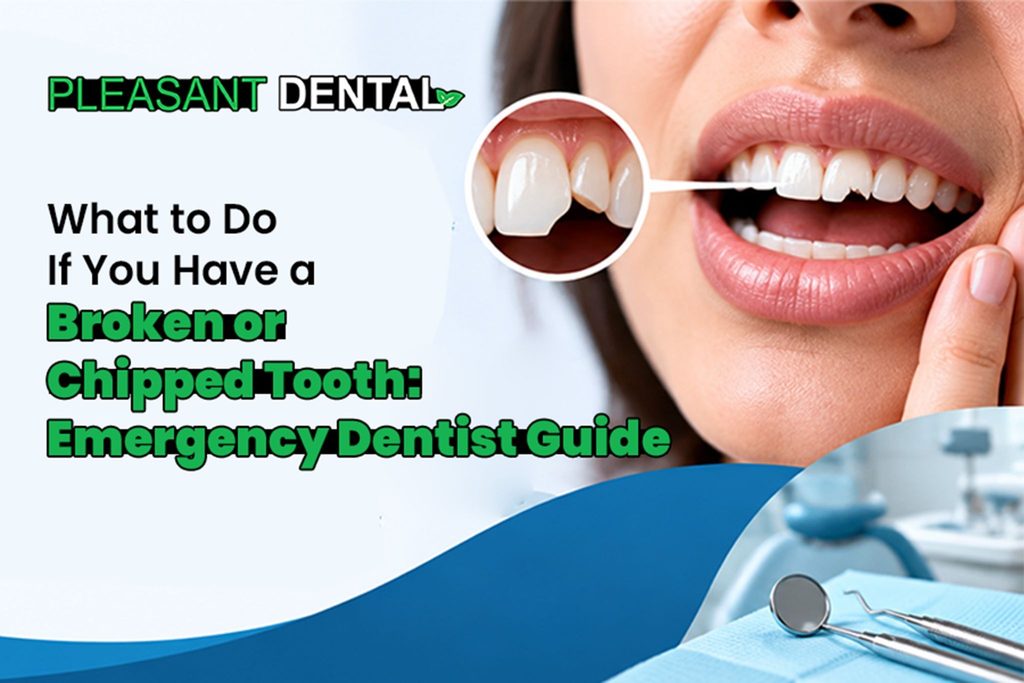
It usually happens fast. A bite of something harder than expected, a collision on the basketball court, or a slip on a wet floor, and suddenly your tongue finds a sharp edge where a smooth tooth used to be. Whether the damage is a tiny flake or a large break, the choices you make in the next few hours can affect how easily the tooth can be repaired. Here is a practical guide to handling the moment and getting the right care.
Start With a Quick Check
Take a Deep Breath and Look at What Just Happened. Check in a mirror if you can, and ask yourself:
• Is there heavy bleeding, or has your face swelled?
• Is the pain sharp, throbbing, or getting worse?
• Does the tooth feel loose or out of position?
• Did you hit your head, or do you feel dizzy or confused?
If you have a head injury, trouble breathing, or bleeding you can’t control, go to an emergency room first. Otherwise, move on to the steps below.
Your First-Aid Checklist
Clean the area. Rinse your mouth with lukewarm water. A mild salt-water rinse is also fine. Avoid strong mouthwash, which can sting exposed tooth tissue.
Stop any bleeding. Press clean gauze or a damp tea bag against the injured lip, cheek, or tongue for about 10 minutes.
Calm the swelling. To keep inflammation down, gently press an ice pack against your cheek using a 15-minute on, 15-minute off routine.
Ease the discomfort. Take over-the-counter pain relievers exactly as directed on the label to keep discomfort under control. Keep pills away from the gums and the tooth itself, since dissolving medication against tissue can cause irritation.
Cover sharp edges. A bit of dental wax, available at most pharmacies, or sugar-free gum can keep the rough spot from cutting your tongue.
What to Avoid Until You’re Seen
• Avoid chewing on the injured tooth to prevent further damage, cracks, or pain.
• Avoid poking the tooth with your tongue or fingers, as this can irritate the pulp and introduce bacteria.
• Trying to glue or file the tooth yourself
• Waiting for the pain to disappear before calling
A tooth that stops hurting is not necessarily healed, so never delay a dental visit just because the pain goes away. Inner nerve damage may seem to settle down, but left untreated, it often returns as a severe infection.
How Dentists Repair Broken Teeth
After an exam and X-rays, your dentist will choose a treatment based on how deep the break goes.
• Polishing: A very small chip may only need smoothing.
• Bonding: Tooth-colored resin is shaped and hardened to rebuild the missing corner.
• Veneer: A thin porcelain shell can restore a visible front tooth.
• Crown: A cap covers and protects a tooth with substantial damage.
• Root canal: If the nerve is exposed or infected, the inside of the tooth is cleaned and sealed, usually followed by a crown.
• Extraction and replacement: When a tooth can’t be saved, an implant or bridge can restore your bite.
Acting quickly gives you more of these options, and the less invasive ones are more likely to work.
When It Can’t Wait
Call for same-day care if you have severe pain, a visible pink or red center in the break, swelling, a loose tooth, a bad taste, or a fever. These can point to nerve damage or infection that will not resolve without treatment.
Why a Family Dentistry Practice Makes Sense
Emergencies rarely arrive at convenient moments, and they strike every age. A Family Dentistry office can care for toddlers who fall off scooters, teens with sports injuries, adults with cracked fillings, and grandparents with worn-down teeth, all under one roof.
That continuity brings real benefits:
• Your history and X-rays are already on file, which can speed up diagnosis.
• Children are often calmer in a place they recognize.
• One team can handle the emergency visit and the follow-up care.
• Scheduling is simpler when the whole household sees the same office.
Choosing a Dentist in Euless, TX
If you live in or near Euless, keep a local contact ready before something goes wrong. When you search for a dentist in Euless, TX, consider a practice that:
• Reserves time for urgent visits
• Offers digital X-rays for fast diagnosis
• Provides restorative treatments such as bonding, crowns, and root canals
• We are a family-centered clinic that welcomes patients of all ages with open arms.
• Explains costs and options clearly
When you call, describe what happened, when it happened, and your symptoms. Let the staff know if you saved the tooth fragment, and ask what to do until you arrive.
Preventing the Next Chip
Some accidents can’t be avoided, but a few habits reduce your risk:
• Wear a mouthguard for contact sports and recreational activities.
• Don’t chew ice, popcorn kernels, or pen caps.
• Use tools, not your teeth, to open bottles and packages.
• Have worn or cracked fillings checked at regular exams.
The Takeaway
A chipped or broken tooth won’t repair itself, and waiting rarely makes it easier to fix. Clean the area, protect it, manage the pain, and call your dentist promptly. With quick action and a dependable Family Dentistry team nearby, you can protect the tooth and get back to normal