
Bleeding gums are easy to dismiss. You might blame a stiff toothbrush or a busy week and move on. It is a chronic bacterial infection of the gums and supporting bone, and the inflammation it creates can reach well past your mouth. Knowing how it works helps you spot trouble early and act before it becomes serious.
How Gum Disease Takes Hold
Every mouth contains bacteria. When brushing and flossing miss the film that forms along the gumline, those bacteria multiply and harden into tartar. The gums react by becoming inflamed, and over time they pull away from the teeth, creating pockets where even more bacteria collect.
Dentists describe two stages. Gingivitis is mild and reversible, marked by puffy gums that bleed easily. Periodontitis is more advanced. Because it rarely hurts at first, many adults have it without knowing.
Why It Matters Beyond Your Mouth
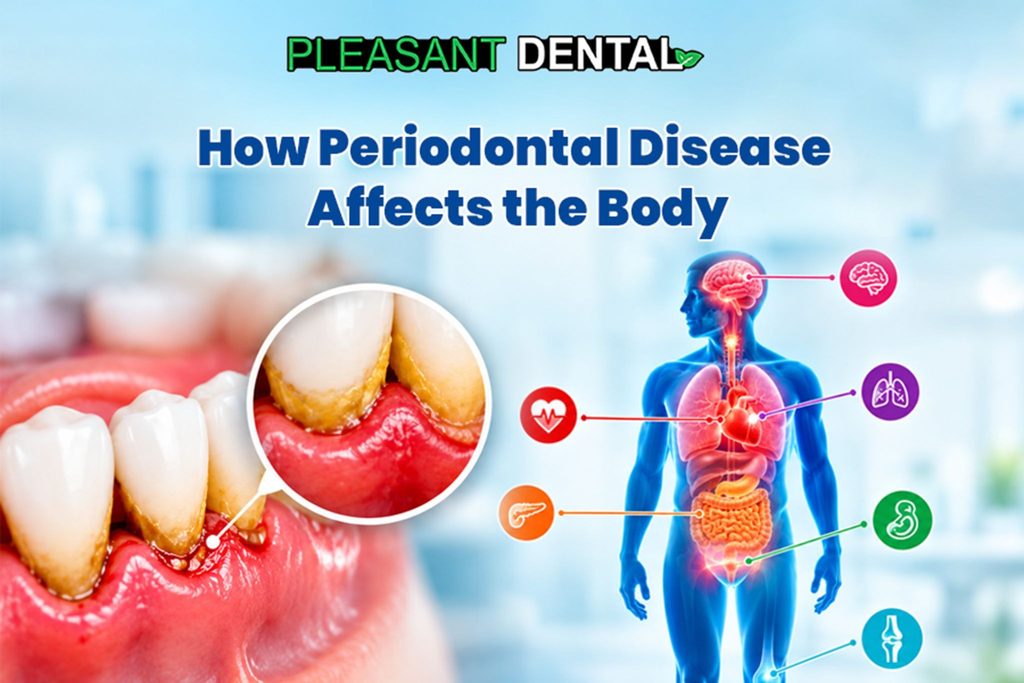
Your gums are rich in blood vessels. When they stay inflamed for months or years, bacteria and inflammatory substances can enter circulation, and the body’s immune system stays on high alert. Research, including material from the American Dental Association, has linked periodontal disease with several health conditions. Scientists stress that these are associations, and that gum disease and other illnesses often share risk factors such as smoking and poor diet. Still, the pattern is worth noticing.
Heart and circulation. Studies suggest that people with gum disease face a higher chance of cardiovascular problems. Researchers believe chronic inflammation may play a role, though a direct cause has not been proven.
Blood sugar. Diabetes and gum disease reinforce each other. High blood sugar makes infections harder to fight, while untreated gum infection can make glucose harder to manage. Treating one may help the other.
Lungs. Oral bacteria can be breathed into the airways. For older adults or anyone with a weakened immune system, that may raise the risk of respiratory infection.
Pregnancy. Hormonal shifts make gums more reactive, and some research connects severe gum disease with pregnancy complications. Prenatal dental care is considered safe and worthwhile.
Brain and joints. Researchers are still investigating possible links to Alzheimer’s disease and rheumatoid arthritis. The evidence is early, so treat these as areas of study rather than settled facts.
Symptoms Worth Taking Seriously
Schedule a dental visit if you notice:
• Gums that bleed, swell, or look darker red than usual
• Bad breath that doesn’t go away
• Receding gums or teeth that look longer
• Sensitivity, or pain when chewing
• Teeth that feel loose or have shifted
When Gum Problems Become Urgent
Most gum disease progresses gradually, but infections can flare quickly. Call an emergency dentist the same day if you develop:
• Intense, throbbing pain in a tooth or the gums
• A swollen face, jaw, or neck
• A painful bump on the gum that leaks pus
• A sudden loose tooth
• Fever combined with mouth pain
These can signal an abscess, which needs prompt treatment to stop the infection from spreading. If swelling makes it hard to breathe or swallow, go to the nearest emergency room instead.
Protecting Your Child’s Gums
Kids can develop gingivitis from plaque, especially if they skip flossing or snack often. Pediatric dentistry offers care shaped around young patients, including gentle cleanings, guidance on brushing technique, and monitoring of how teeth and jaws are developing.
Parents can help by:
• Brushing for young children until they can do it well on their own
• Limiting sugary drinks and frequent snacking
• Keeping regular checkups, beginning around the first birthday
Teenagers deserve extra attention. Hormonal changes and braces can make gums more prone to inflammation, so consistent habits matter.
What Treatment Looks Like
• Early stage: A professional cleaning and better home care can reverse gingivitis.
• Moderate stage: Scaling and root planing cleans below the gumline and smooths the roots.
• Advanced stage: Medication, or gum and bone surgery, may be needed to control infection and restore support.
• Long term: Frequent maintenance visits help prevent recurrence.
Everyday Habits That Protect You
• Brush twice daily with fluoride toothpaste.
• Clean between your teeth every day.
• Stop using tobacco, a major risk factor for gum disease.
• Keep diabetes and other conditions under control with your doctor.
Finding a Dentist in Euless, TX
If you can’t remember your last checkup, or your gums have started bleeding, don’t wait for pain. Book an evaluation with a dentist in Euless, TX who can measure your gum pockets, take X-rays, and explain your options in plain language. It helps to choose a practice that welcomes the whole family and can see urgent cases quickly, so you have one dependable team whether you need a routine cleaning for your child or help with a sudden infection.
Healthy gums support more than a confident smile. Caring for them is one of the simplest ways to look after your whole body.